Showing posts with label environment. Show all posts

Tuesday, May 8, 2012

bouquets of dandelions


except for a few small, isolated patches in the deep shade of overhanging ledges, the snow has finally melted from the trails around mount mansfield, the highest mountain in vermont. the melodic songs of waterfalls plunging down from the dizzying height of rocky outcroppings were a serenade to springtime, but the trees looked wintry, gray and skeletal—the buds tiny, embryonic and tightly curled.

on saturday my daughter alex and i played tourist in her backyard and drove up to nearby smuggler's notch after we helped the baby of the family, hannah, start to move out of one apartment in preparation to move into another.

at the higher elevations there was minimal green, but in the rest of vermont there was plenty of it, including bright green plastic bags which were sprouting up like cabbages along the road from richmond to the notch. the first saturday in may is green up day in vermont and many people were out cleaning winter's debris from the landscape. the bags were left beside the road to be collected later. we didn't participate, though. our excuse? we didn't have one, but i could say one of us was too pooped from driving for four hours and helping with the apartment and the other one was too pregnant (but too pregnant doesn't work as an excuse because the girl hiked the pinnacle at 30 weeks of pregnancy). plus we had other plans.


in addition to green there was lots of yellow—enough dandelions in fields and lawns and grassy ditches for thousands of bouquets. i always feel a little sad for the despised dandelion. i think they are very pretty (and useful—how about a yummy salad of dandelion greens and a sip of dandelion wine? no? ok, so i'll admit that to me, anyway, those aren't the tastiest of treats) and i find myself getting upset about the containers of nasty "weed begone" killers people douse them with in search of perfection. i generally have a hard time with unnatural weed-free golf course types of grassiness which leach lakes of harmful chemicals into the environment.

but in vermont the dandelions seem to thrive; people either like dandelions better here or they have made peace with the idea of their existence due to the severe cost to nature of attempting to eradicate them—they are an accepted and natural part of the landscape. the dandelions' sunny yellow faces will continue to keep on smiling until the day comes when lawnmowers are hauled out of sheds and garages and barns and revved up for that first mow of the season.


Tuesday, June 21, 2011

worm city

the day lilies in our yard have become unruly. their behavior is out of control. technically, fall is the time to thin out the flower beds, but those lilies of mine are strong, stubborn and bossy; they like to jostle the other plants out of the way. i need to tackle their aggressive tendencies whenever i can in order for the other plants to have room to grow.

i was poking around with my shovel in a particularly crazy patch of lilies, trying bring some kind of order to the jumble out there. i dug out big clumps of spindle-shaped tubers with lots of roots attached. as i shook off the dirt and struggled to separate the dense root structure of the plants, i noticed a wonderful sight.

there were delightful worms wriggling around all over the place in the root ball. many, many worms. neighborhoods of worms living in my dirt.

i had discovered a genuine worm city. this made me very excited.

most people say yuck icky to worms and think they are disgusting. those people, of course, are entitled to their opinions. i, however, think worms are grand. they are not drop-dead cute, i guess, and maybe you wouldn't want to hug and kiss one like a puppy, but in the natural order of things they are most valuable.

earthworms aerate the soil with their burrowing. in addition, when they break down organic matter, like dead leaves, stalks, grasses, weeds, insects, seeds and roots, with their voracious chomping, soil nutrients are enhanced. and then there are the highly beneficial worm droppings. the activity of microorganisms is greatly increased due to the fact that those guys really love worm poop. quite simply, life in the dirt is good, it's a happy place, when worms are around.

all i can say is, a community of worms residing right outside my window makes me happy too, ok?

Tuesday, February 1, 2011

at the wildlife refuge

little blue heron searching for a juicy snack. j.n. "ding" darling national wildlife refuge. january, 2011.

the northern part of sanibel island is almost entirely a wildlife refuge. we saw hundreds of birds on the hot, sunny day we were there, including anhingas, great blue herons, little blue herons, egrets and roseate spoonbills. as usual, their focus was on eating. herons are unbelievable when it comes to grabbing a meal. they eat a wide variety of things, not just fish but also lizards, snakes, frogs, crabs, grasshoppers, dragonflies and aquatic insects. what opportunists! they'll eat anything they can swallow! the birds who were not actively pursuing a meal were actively pursuing a nap.


far, far in the distance, a flock of roseate spoonbills taking a nap.

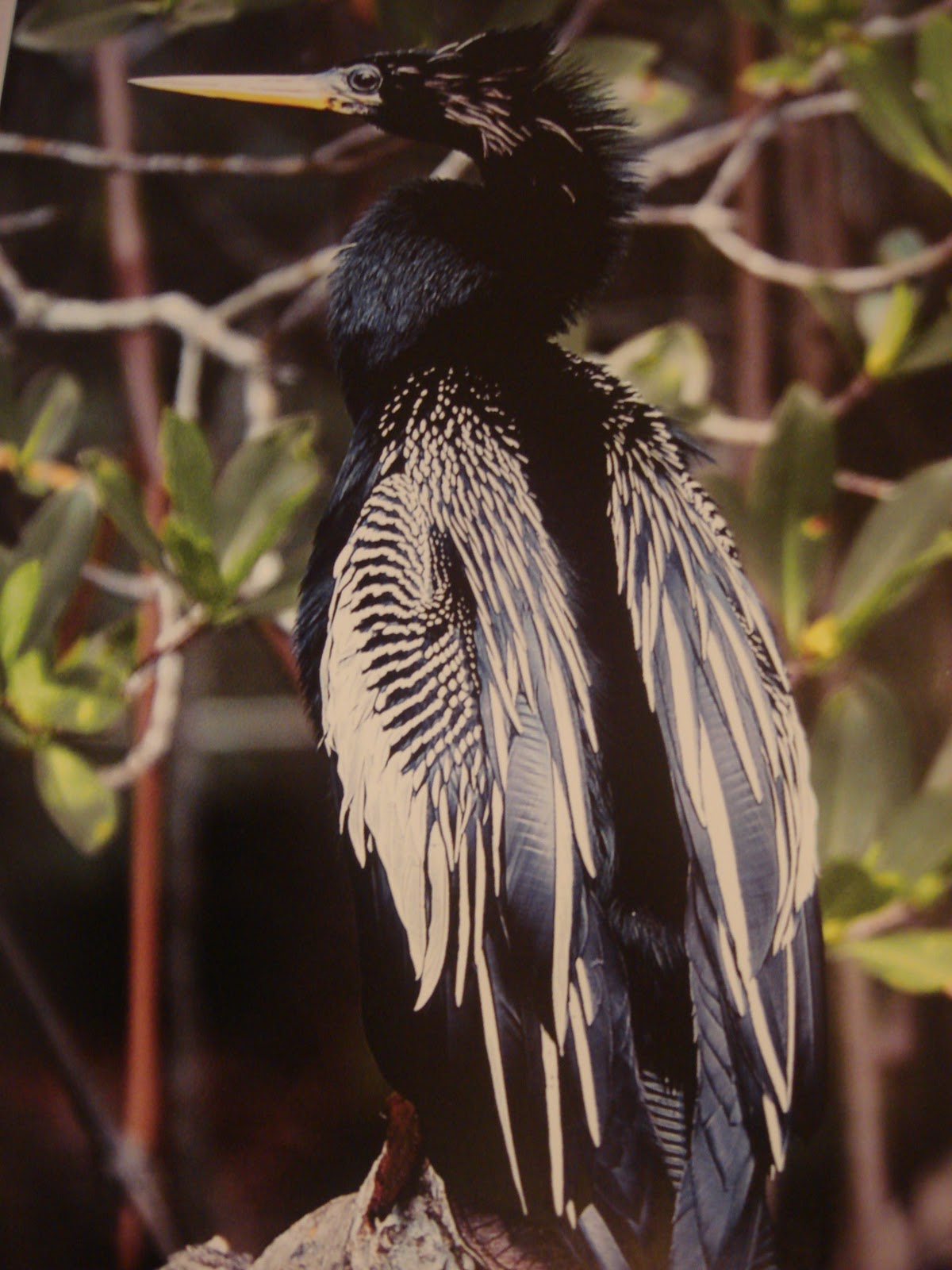
an anhinga drying his wings.
above is a picture i took of a much larger photo, hanging on my study wall, ed took of an anhinga at the wildlife refuge years ago. i had to include it because my anhinga is so far away and washed out in the dazzling sunshine, and, more importantly, because ed is a far better photographer!  
a young blue heron.

the only alligator i saw on sanibel island.
the over 5000 acre wetland refuge, home to a wide variety of birds, mammals and marine life, is named in honor of jay darling. darling (1876-1962) was a political cartoonist whose first conservation cartoon was published in 1901 to help support president teddy roosevelt's desire to establish a forestry service. "ding" was his pen name. darling used his satirical pen to bring national attention to environmental issues, and thus he and roosevelt became good friends. wildlife exploitation and the destruction of irreplaceable waterfowl habitat were darling's most important lifelong concerns.

darling, who was known as the best friend a duck ever had, was recruited by president franklin roosevelt in 1934 to be on the wildlife restoration committee, even though he was a staunch republican. the first duck stamp was designed by him in 1934. he organized various sportsmen groups into the national wildlife federation. mr.darling wrote two books, and won the pulitzer prize twice for cartooning.

a four mile, one way road winds through the middle of the ding darling sanctuary. you can stop and observe the wildlife whenever you want. there are also foot and bicycle paths. people were quiet and respectful of the wildlife the day we visited.

in the distance, hanging out on sandbars in the water and surrounded by protected mangrove forest, we also saw brown pelicans, white pelicans (what magnificent birds!), mergansers and egrets.